Understanding Gulf Stream’s Private Club And Estate Lifestyle
June 4, 2026
June 4, 2026
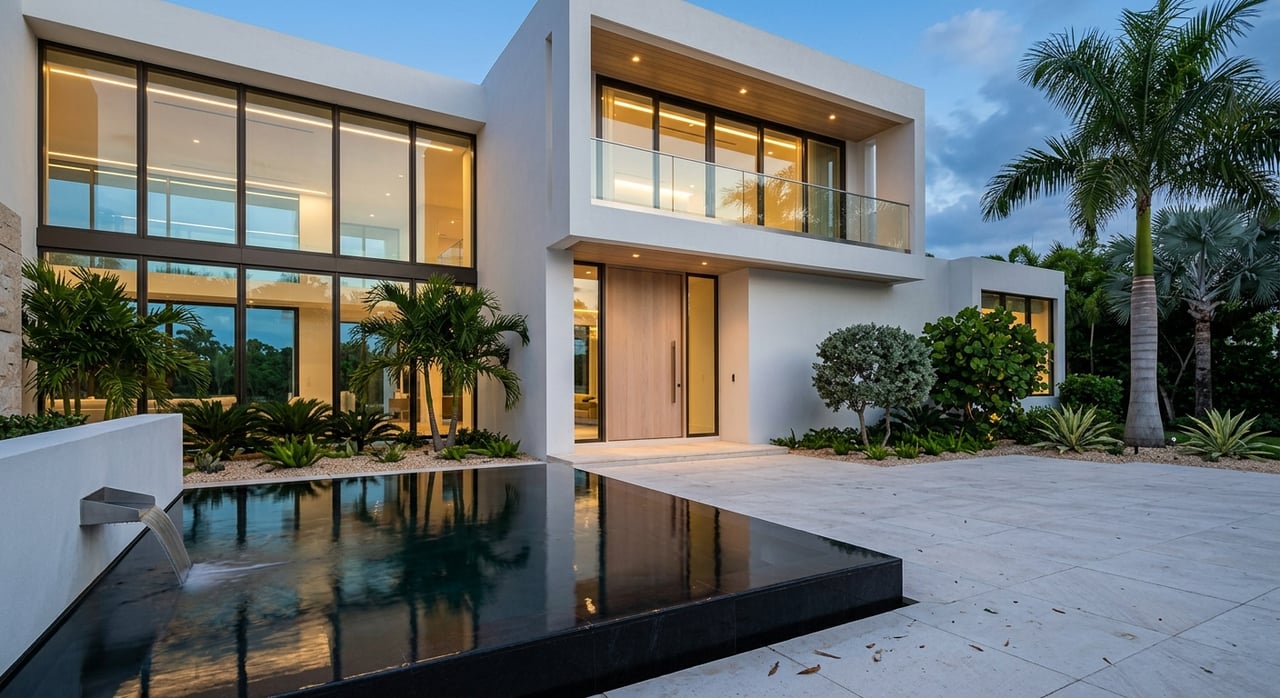
If you are drawn to places that feel tucked away rather than built for crowds, Gulf Stream stands out right away. This is a town where privacy, preserved character, and club-centered recreation shape daily life in a very specific way. If you are considering a home here, it helps to understand what that lifestyle really looks like, both inside town limits and just beyond them. Let’s take a closer look.
Gulf Stream is small by design and in practice. The town reports 954 residents, 662 housing units, and 457 households, with 88% of occupied homes owner-occupied. It also includes 537 acres of residential, public, and preserved land, with no properties zoned for commercial or industrial use.
That zoning pattern explains a lot about the atmosphere you feel when you drive through town. Gulf Stream is not a commercial beach destination with storefronts, traffic-heavy retail strips, or entertainment districts. Instead, it functions as a quiet residential enclave where homes, landscaping, and open space define the experience.
The town’s history also adds depth to that sense of privacy. Gulf Stream was shaped in the 1920s as a planned golf-and-polo community, and seasonal oceanfront homes began appearing during that era. Several original homes still remain, and later design guidelines helped preserve the district’s character while limiting oversized redevelopment.
State Road A1A is central to the town’s identity. The Town of Gulf Stream describes this stretch as the only remaining section where the Australian Pine canopy still stands, and it has been designated historic and scenic.
For you as a buyer or homeowner, that matters because the road is more than a route through town. It reinforces the feeling of arrival, privacy, and continuity that Gulf Stream is known for. The setting reads as coastal and elegant, but in a restrained way that feels more residential than resort-driven.
A major part of Gulf Stream’s identity comes from its private-club culture. Social life here is less about public venues and more about established membership traditions.
Gulf Stream Golf Club is the town’s signature private club. Its official history describes it as an invitation-only club established in 1924, with a Donald Ross-designed golf course and an Addison Mizner clubhouse.
The club’s guest policies help explain the tone. Guests must be accompanied by a member, dress standards are enforced, and cell phones are not permitted in the clubhouse or on the golf course. Those details point to a culture that is formal, traditional, and intentionally controlled.
For many buyers, this is part of the appeal. The club is not simply an amenity. It is part of a broader lifestyle built around routine, privacy, and a sense of longstanding custom.
The Little Club adds another layer to the local recreation scene. Established in 1968 on the former polo fields of Gulf Stream, it is located on A1A in Gulf Stream and is less than one mile south of Woolbright Road. The town history also notes that it is a par-3 course.
Together, Gulf Stream Golf Club and The Little Club show how recreation in Gulf Stream tends to be organized. Instead of public entertainment hubs, the town’s social structure is shaped by private membership spaces and low-key residential routines.
Gulf Stream does not feel accidental. Its identity today still reflects early planning decisions and a long commitment to preservation.
The town’s history highlights its roots as a golf-and-polo community and describes the polo fields as once the nation’s top winter venue. It also notes that the community maintained an understated, elegant vision established by its founding families.
That helps explain why Gulf Stream often feels more like a preserved private enclave than a typical South Florida coastal town. Even when homes evolve over time, the larger setting still reflects continuity, scale, and a residential rhythm that has been protected for decades.
If you want beach access, Gulf Stream offers it in a quieter format than many nearby coastal areas. Palm Beach County operates Gulfstream Park at 4489 N. Ocean Boulevard, with 600 feet of guarded beachfront, parking, picnic areas, restrooms, showers, and saltwater-fishing access.
This is important because it shows that coastal living here still includes practical public beach access. At the same time, the beach experience is managed and understated. You are not stepping into a boardwalk scene or a resort-style public corridor.
That difference is a big part of the town’s appeal. You get the benefits of the ocean close at hand, but in an environment that feels more controlled and less commercial.
In Gulf Stream, the beach is not only a lifestyle feature. It is also part of a conservation-minded routine.
The town’s 2026 sea turtle nesting notice states that Sea Turtle Adventures monitors Gulf Stream’s 2.3 miles of beach. It also says town code strongly encourages lights to be shielded, covered, or turned off so they are not visible from the beach.
That means coastal living here comes with a certain discipline, especially after dark. For many residents, this supports the town’s quiet atmosphere while also reflecting a clear respect for the shoreline environment.
Because Gulf Stream has no commercial or industrial zoning, most dining, shopping, and everyday services are found nearby rather than inside town limits. In practical terms, residents typically look to Delray Beach and Boca Raton for those needs.
That arrangement creates a lifestyle balance many buyers appreciate. At home, you get privacy, calm streets, and a primarily residential setting. When you want restaurants, boutiques, or a larger mix of services, you can head to nearby hubs without giving up the quiet character of where you live.
Downtown Delray Beach is a frequent destination for dining and going out. Its official downtown site describes Atlantic Avenue as a major corridor for boutiques, cafes, restaurants, bars, and nightlife.
The Palm Beaches tourism site also points to nearby dining options such as City Oyster, Caffe Luna Rosa, Deck 84, Akira Back, and Rose’s Daughter. For Gulf Stream homeowners, Delray often fills the role of lively nearby town center while Gulf Stream remains the retreat.
Boca Raton expands those options even further. The city notes that Mizner Park includes more than 40 shops and dining spots, and that Town Center at Boca Raton is one of South Florida’s major luxury shopping destinations.
This is one of Gulf Stream’s strongest lifestyle advantages. You are not choosing between seclusion and convenience. You are choosing a residential setting that stays quiet while still sitting close to strong dining and retail options in neighboring communities.
If you are considering Gulf Stream, it helps to approach the town with the right expectations. This is not the place to choose if you want walkable retail, public nightlife, or a busy resort atmosphere outside your front door.
It may be a strong fit if you value a residential town with preserved character, scenic coastal surroundings, private club traditions, and nearby access to Delray Beach and Boca Raton. In that sense, Gulf Stream offers a very specific blend of estate living, coastal access, and day-to-day discretion.
For buyers searching in Palm Beach County’s coastal markets, that combination is rare. Gulf Stream stands apart because it remains deeply residential, visually consistent, and closely tied to a private-club way of life.
If you want help understanding how Gulf Stream compares with nearby coastal communities, or you are looking for discreet guidance on available and off-market opportunities, Keith Neff and Camilla Goodwin LLC offers a thoughtful, white-glove approach tailored to South Florida’s luxury market.
Stay up to date on the latest real estate trends.
June 4, 2026
May 28, 2026
May 21, 2026
May 14, 2026
May 7, 2026
April 23, 2026
April 16, 2026
April 2, 2026
March 24, 2026
Keith & Camilla strive to represent, advise and achieve results that ensure long-term success for all of their clients. They view each assignment as an opportunity to create a long-term relationship with a win-win conclusion for all parties.